Jan Richter
Solo developer Matthew Burniston accuses the Steam title Cursor Cult of copying his identically named concept with Claude Code. In a press email to PlayInsider he expressly asked us to cover the story, pointing to the wider debate about AI-generated code in indie development. We are treating that claim as an allegation. Bear Den Gaming Industries has not issued a statement to us.
Burniston, who works under the name Hacktic, is developing a game called Cursor Cult. In his pitch, small beings worship the mouse cursor as a god, and players can draw symbols to interact with them. In the email to our press inbox he says someone rebuilt that concept, including the symbol drawing, in about three weeks with Claude Code and released it on Steam under the same name. PlayInsider checked the public sources he cited on November 10, 2026. We are not adopting his conclusion that the Steam game is a clone.
What Matthew Burniston alleges about Cursor Cult
On September 25, 2026, Burniston posted a YouTube Short on his hacktic channel titled “I made a cult that worships your mouse cursor.” It shows a prototype in which a cult follows the mouse cursor around the desktop, gathers when the cursor stops, and worships it. That generates faith, which can be spent on more followers and upgrades; later on, missionaries are meant to grow the cult on their own. Burniston has not pointed us to a Steam page for this version.
On November 9, 2026 he followed up with a video titled “Someone cloned my game with AI.” He says a search for Cursor Cult led him to a game of the same name that had launched on Steam a few days earlier. In his view it is not just the same title but the same concept, including the idea of communicating with the cult by drawing sigils. Together with the AI disclosure on the Steam page and the timing after his announcement, he presents this as evidence of an “AI clone.” In the video he talks about a copy “in a couple of weeks.” The more specific claim that it was built “in about three weeks with Claude Code” comes from his press email to us, not from the video title.
Burniston also says Cursor Cult was meant to be his next main release. He leaves open whether he will still finish his own version. He expressly asks viewers not to go after the accused developer.
What the Cursor Cult Steam page says
Cursor Cult (App ID 5432280) is in fact listed on Steam. The developer and publisher is Bear Den Gaming Industries, and the game launched on November 2, 2026. In the German store it currently costs €4.89 and is listed for Windows. Steam files it under Casual, Indie, Simulation and Strategy.
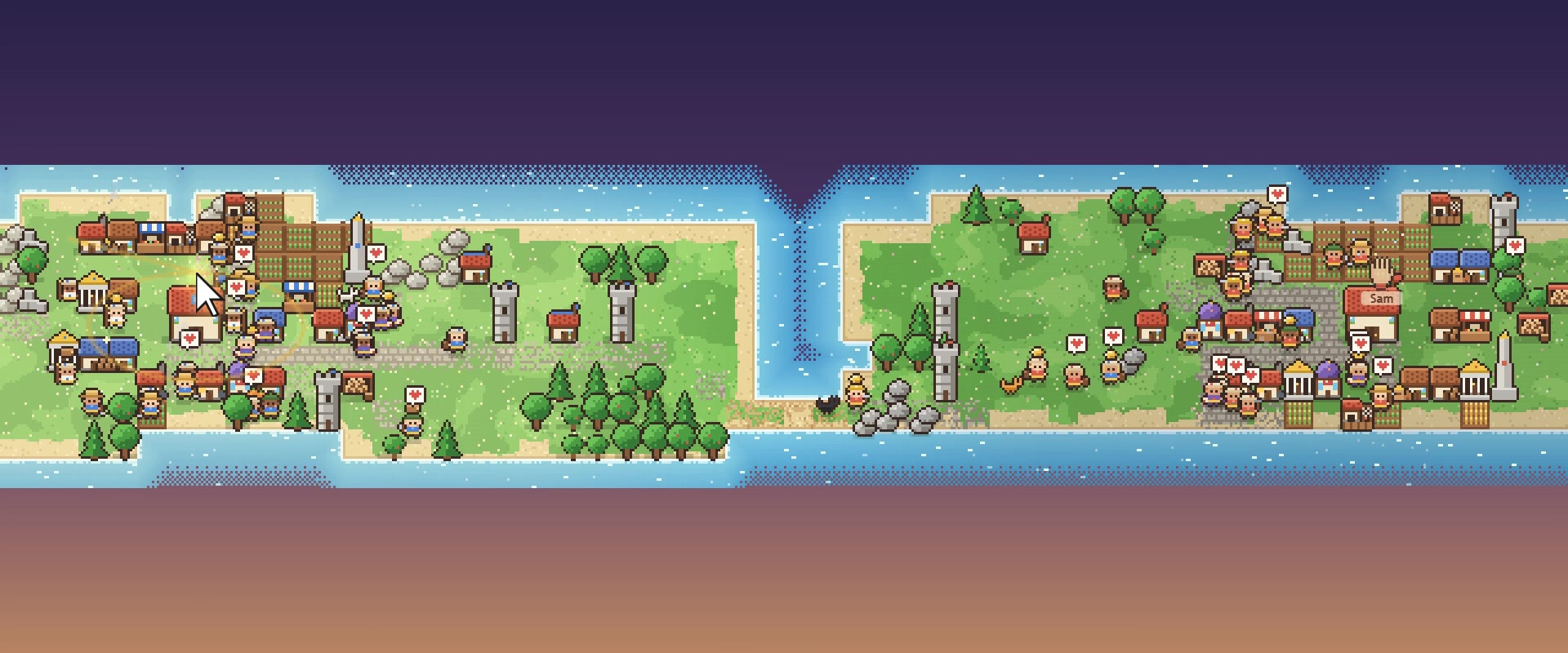
The official description presents Cursor Cult as a desktop companion. A small pixel-art island docks at the edge of the screen. Two tribes live at either end and worship the mouse cursor as the “Sky Hand.” Every 20 seconds their priests read the cursor’s trail as an omen and steer the tribe toward farming, trade, prayer, study or war. Players can also make deliberate gestures: drawing circles, shaking the cursor or resting it over the island. Those gestures have names of their own, including “The Great Wheel” for circles and “The Storm of Wrath” for frantic shaking.

In the “AI Generated Content Disclosure” section, the studio describes its use of AI as follows: the sound effects were generated with AI, then trimmed and mixed for the game, and AI tools also helped write the game’s code. The Steam page does not name Claude Code.
What a public comparison can and cannot show
What can be said from the public record is this: both projects use the name Cursor Cult. In both, characters worship the mouse cursor, both are built as desktop games, and both use cursor gestures. Burniston talks about symbols that let you communicate with the cult; on Steam, named omens are read from mouse movements, including drawing circles.
There are differences as well. The September Short describes something closer to an incremental or idle game, with faith, followers, a tech tree and missionaries. The Steam title is a civilization sim with two tribes, successive ages and omen readings every 20 seconds. Between the Short on September 25 and the Steam launch on November 2 there are a little over five weeks. Whether that amounts to a clone cannot be settled from these public details alone — and we are not making that judgment here.
The debate Burniston places his case in is not new. Anthropic recently tightened a Claude Code rule after criticism of AI copycats on Steam, and players had already complained about a wave of AI games during Steam Next Fest. Anthropic has not tied those changes to this specific Cursor Cult case.
No statement from Bear Den yet
PlayInsider intends to ask Bear Den Gaming Industries for a statement on the allegation. As of this report on November 10, 2026, we have not received a response. If a statement arrives, we will add it.