Jyoka – Castle Town sets out to combine castle-town building, defense and sieges in Sengoku-era Japan. The concept from Japanese solo studio sfvsoft is compelling, but at launch the game trips over brutal resource balancing, missing quality-of-life features and noticeable bugs.
Jyoka has been available on Steam since November 16, 2026, and we jumped straight into the first tiers: laying out rice paddies, paying retainers, fighting off bandits. It quickly became clear that there is a lot of potential here, and just as much frustration. Here is how Jyoka holds up after its first patches.
In this review
Rating and verdict
I really wanted to like Jyoka. Your own castle town in 16th-century Japan, placed anywhere you like on the map, with retainers, rice paddies and eventually full-on sieges: the city-builder genre has been missing exactly this kind of game. The first minutes among the ruins are intriguing, and the music sets the mood nicely.
After that, though, it quickly tips into frustration. Resources are so scarce that I spent more time managing than building in the early tiers, there is no fast-forward, the help explains almost nothing, and terraforming on slopes is a real test of patience. Add bugs such as buildings that suddenly stop working. sfvsoft is responding with several patches a day and has already eased starting resources, building costs and the stone problem. If you have patience and a soft spot for the setting, it may be worth a look. Everyone else should wait for a few more updates.
What we liked
✅ A rare setting: castle-town building in Sengoku Japan, with a free choice of location across the whole map
✅ Huge scope with 190+ building types, taxes, retainers and 73 provinces
✅ Fitting music and a developer who is patching very quickly in the first days
What bugged us
❌ Extremely harsh resource balance, especially stone and money in the early tiers
❌ No fast-forward, no autosave, clunky terraforming and army controls
❌ Bugs with buildings and language settings, thin help texts
Score: 52 %
How we rate
- 90–100Legendary
- 80–89Very good
- 70–79Good
- 60–69Okay
- 5250–59Mediocre
- < 50Weak
At PlayInsider we rate every game individually and always against the expectations of its genre. We judge the story of an action game or adventure by its narrative quality. In a simulation or management game, on the other hand, what counts is what the genre typically offers. This keeps our ratings fair and comparable within a genre.
Our rating in detail
Graphics
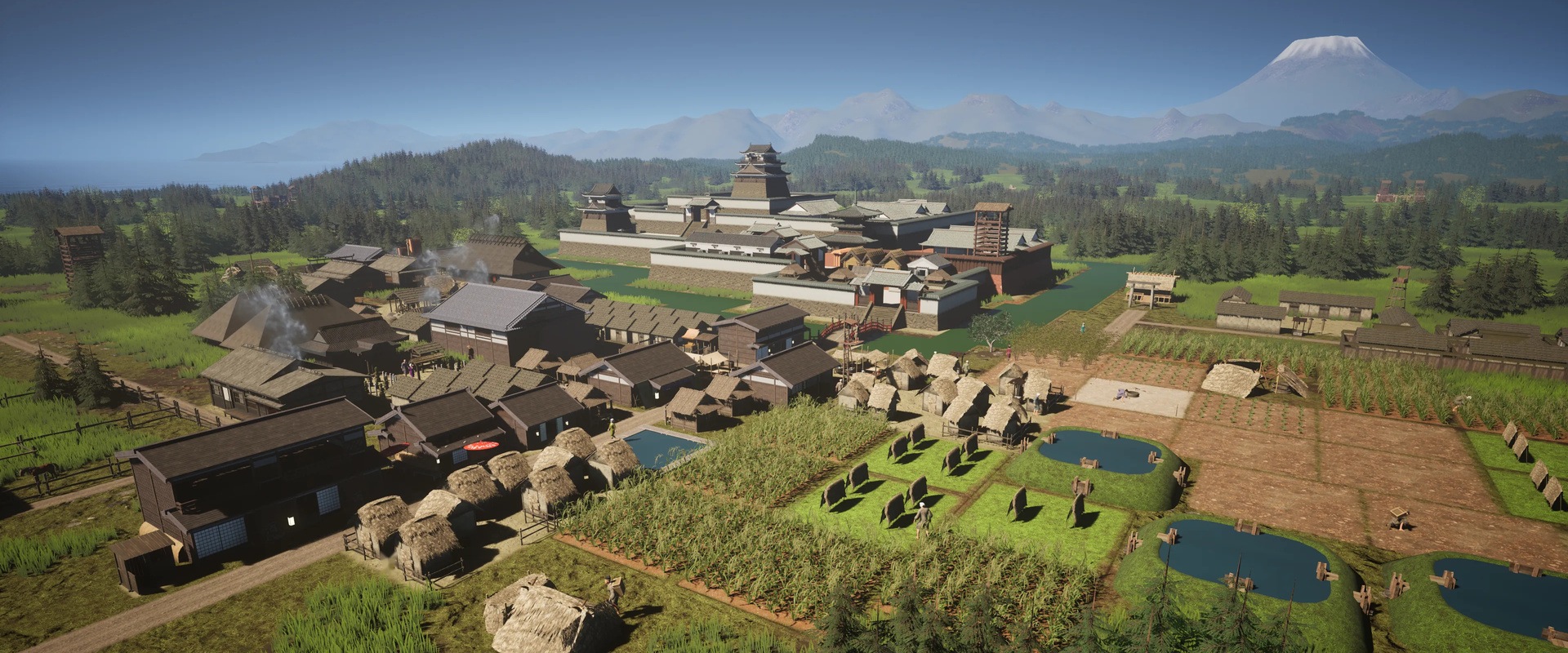
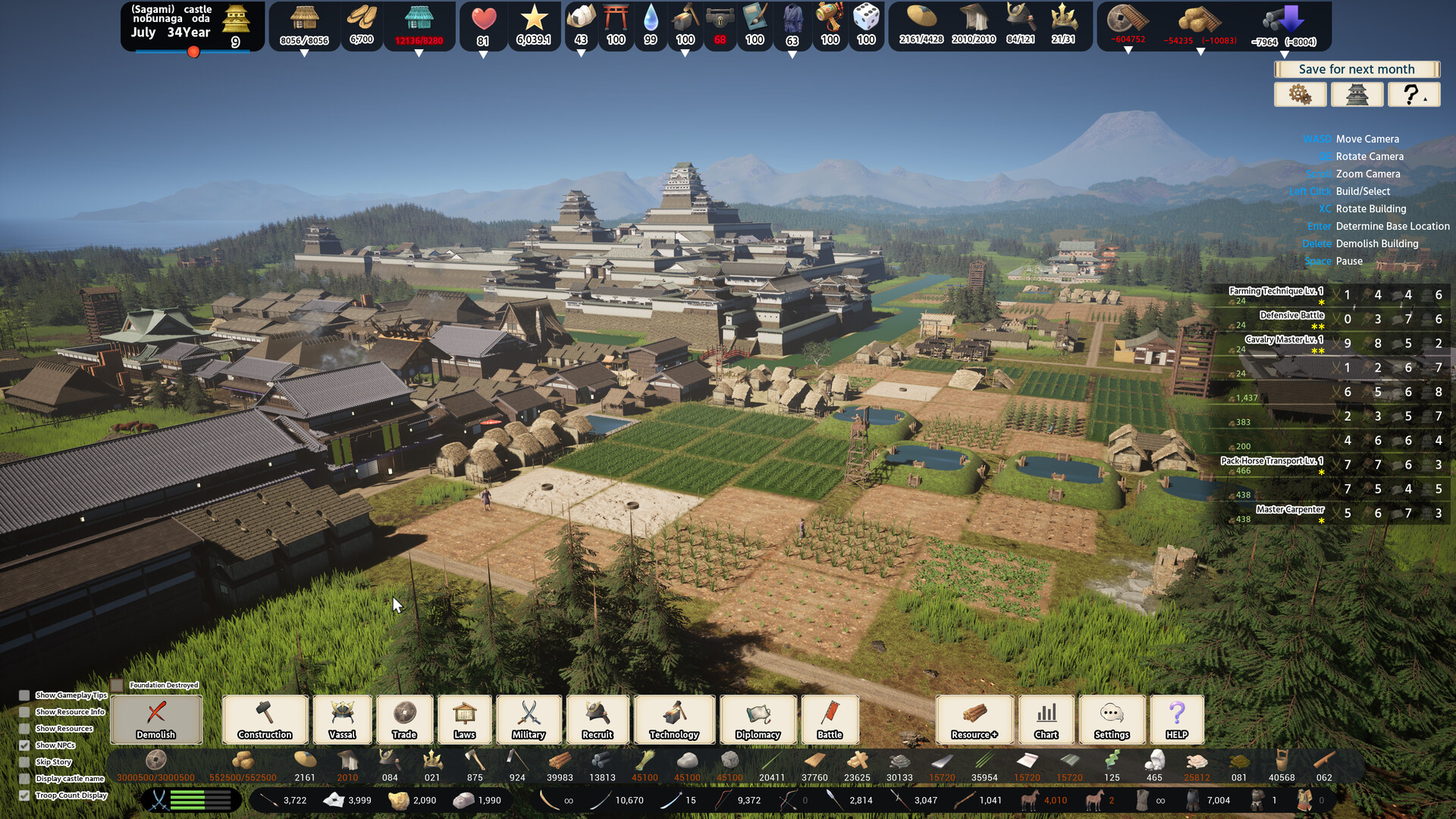
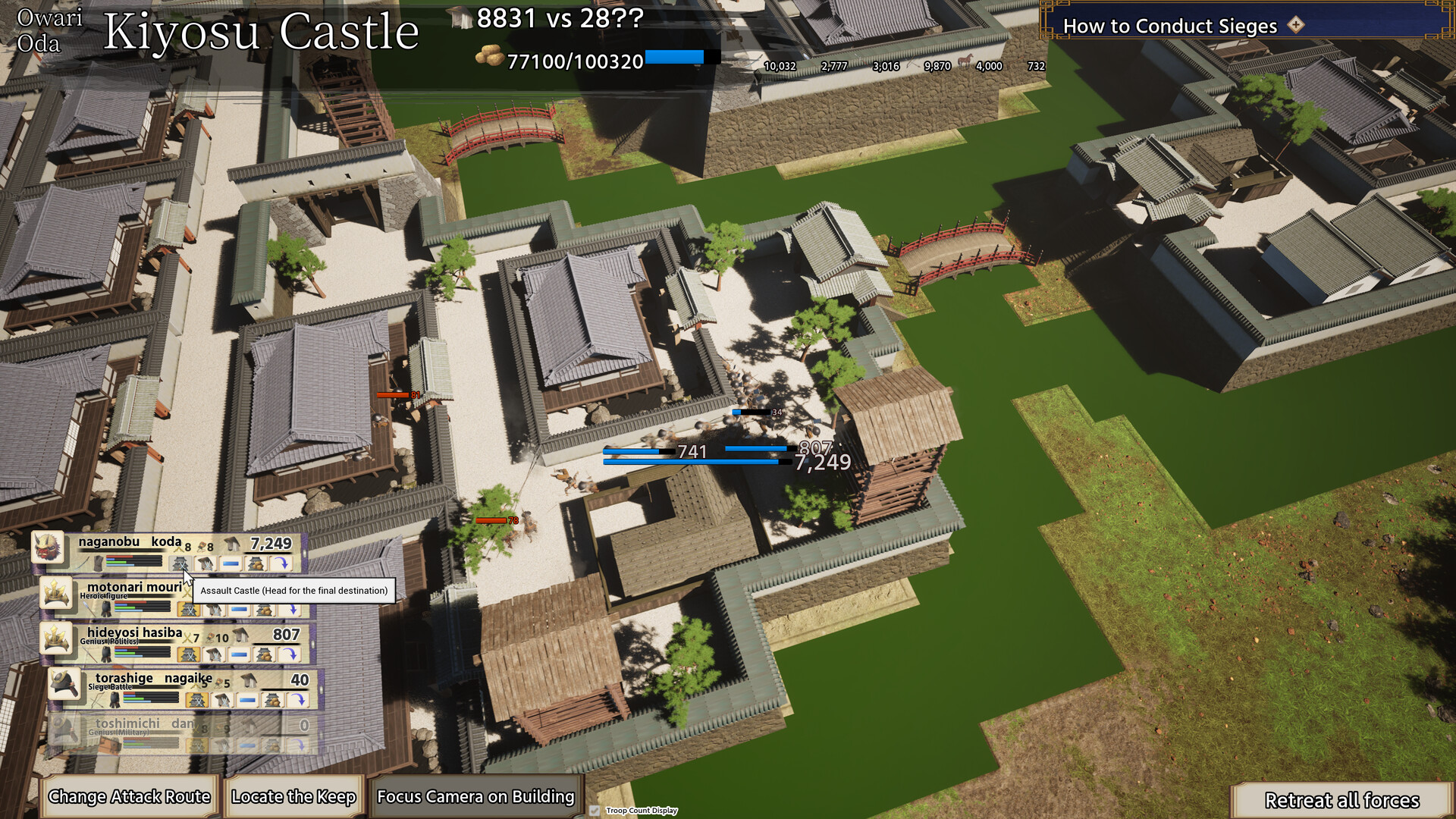
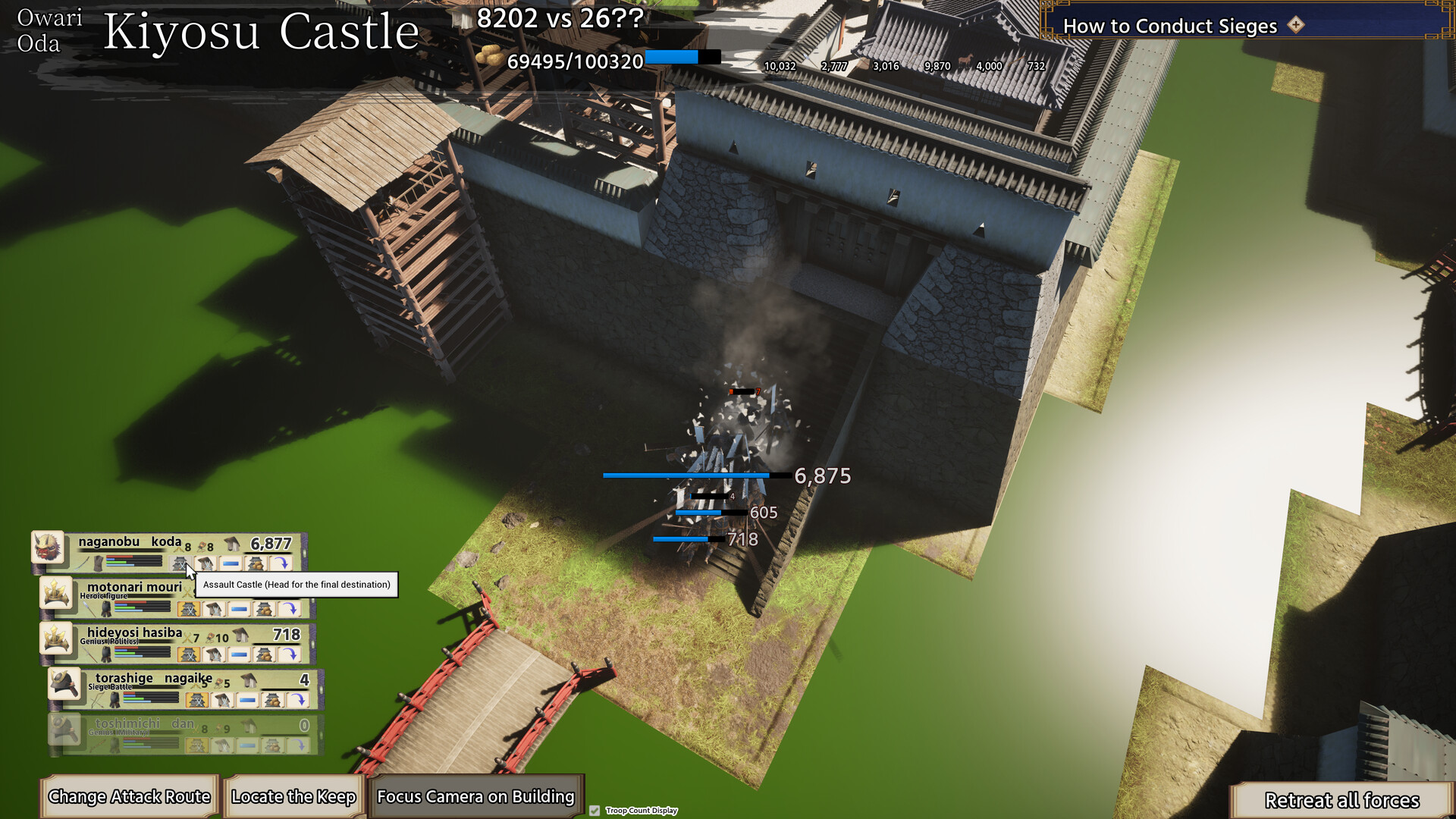
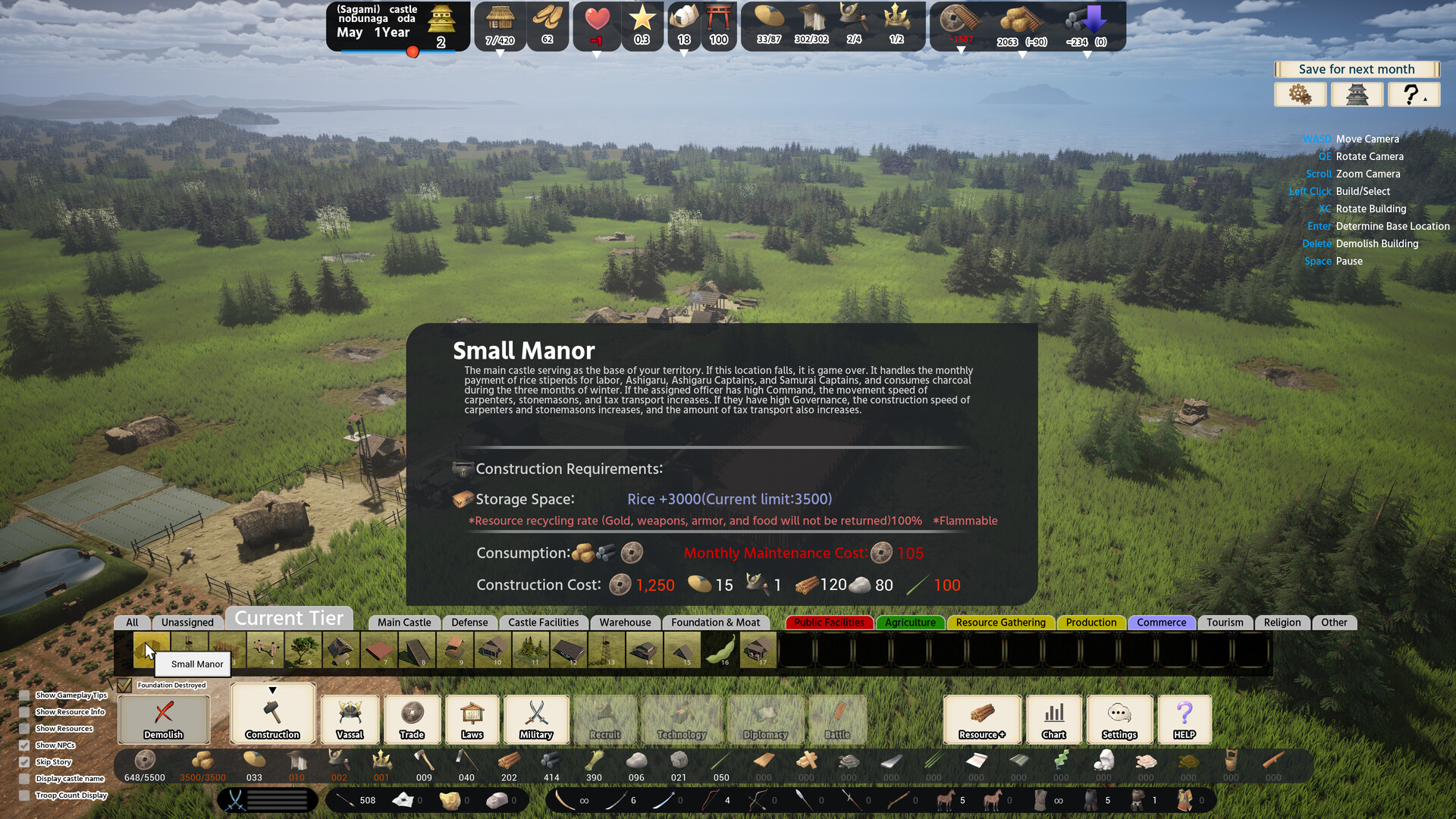
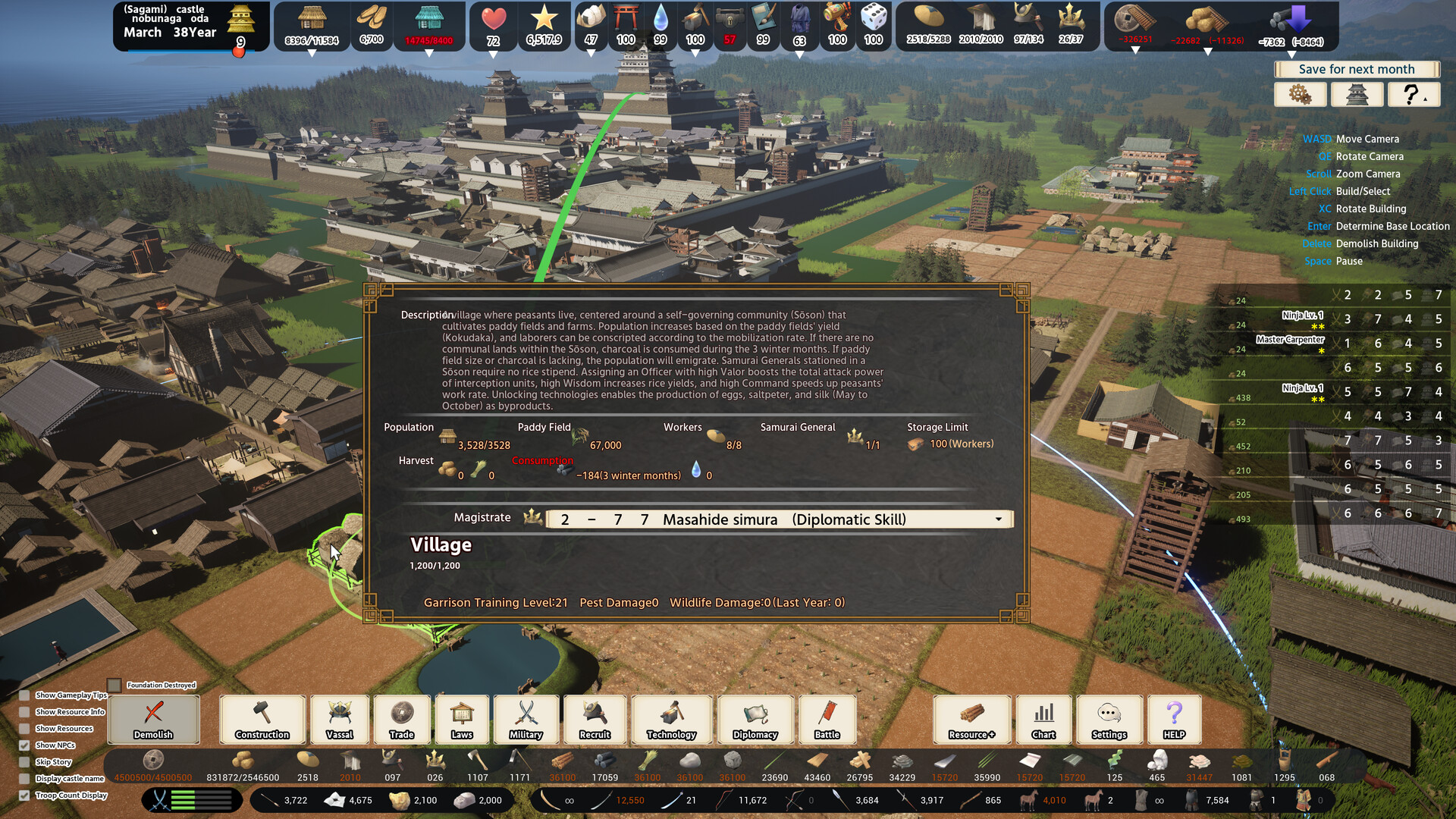
Jyoka runs on Unreal Engine 5, and when you stop to look, it can be genuinely pretty: the map of Japan with its forests, hills and coastlines looks great, a fully grown castle town with fields, storehouses and a keep shows real attention to detail, and the siege scenes pack a punch. In day-to-day play, though, readability suffers. The camera doesn't zoom out far enough, and gentle slopes are almost impossible to spot, even though they decide whether a building can go down or not. Good-looking but not always easy to read, and still solid for a one-person project. That earns it 62 points.
Gameplay
The core idea is excellent: rice is both food and salary, and you grant land to your retainers in exchange for labor and military service. At launch, though, the balance was simply too punishing. Stone was in short supply everywhere in the early tiers, you could barely afford more than a handful of rice paddies and wells, merchants only bought tiny amounts of rice, and the first bandit raid could wipe out an entire settlement. On top of that come long stretches of waiting with no fast-forward, a clunky terraforming system and imprecise army controls without box selection. sfvsoft pushed three patches on November 17: more starting resources, no stone needed for charcoal kilns and reservoirs, cheaper castles, fewer workers per paddy, and straw and clay can now be sold in early tiers. That helps noticeably, but the missing quality-of-life features remain. Right now it's worth 46 points.
Story and setting
Jyoka doesn't tell a traditional story. You start as a kunishu, a minor regional lord, in ruins left behind by bandits, and work your way toward unifying Japan. The opening plays out as a guided story and tutorial mode that explains surprisingly little. The real draw is the Sengoku setting, with 73 provinces and more than 70 castles modeled on real fortresses, although history buffs may raise an eyebrow at the mix of famous daimyo clans from different stages of the era. Fine for a city builder, but not gripping: 55 points.
Depth
On paper, Jyoka is remarkably ambitious: more than 190 building types, six kinds of taxes, edicts, trade, retainer management, a tech tree, diplomacy and battles all the way up to sieging enemy castles. You can also pick your starting location anywhere on the map of Japan, and every region plays a little differently. Early on, though, you see very little of that depth, because climbing the tiers takes ages and the impressive castles from the screenshots only come into reach after many hours. The help texts are thin, you have to work out things like the range of wells, hunting lodges or supply bonuses yourself, and retainers can't be dismissed once hired. Lots of substance, poorly communicated: 60 points.
Tech
Tech is Jyoka's biggest problem at launch. Buildings sometimes stopped working for no clear reason and only came back after being torn down and rebuilt, canceled construction zones left markers behind, and despite an English setting the interface sometimes booted in Spanish. At release there was no way back to the main menu, saving is manual or tied to the monthly save, and there's no autosave. There's still no fast-forward either. The minimum requirements are steep for a city builder. On the plus side, the return-to-menu button and a fix for garbled text have already been patched in. All in all, 38 points.
Sound
Audio is one area where Jyoka gets things mostly right. The Japanese-inspired soundtrack suits the Sengoku setting and carries the quieter building phases, and it's one of the things we remember most fondly. There's no voice acting; feedback comes through text and sound effects that do their job without standing out. Okay, but nothing special: 60 points.
What Jyoka is
On Steam the game's official title is “Jyoka -Castle town-”, while the German store page shortens it to “Jyoka”. It's a single-player strategy game with city building, set in 16th-century Japan. You play as a kunishu, a minor regional lord, pick a location on the map and start out in ruins devastated by bandits. Rice is both food and the stipend for your samurai retainers: you lay out paddies, grant land and bind retainers to labor and military service in return.
The official press release on Games Press describes Jyoka as the work of a solo Japanese developer, with around three years of development behind it. The game's official YouTube channel goes by the name Yuto and points to Unreal Engine 5. sfvsoft is both developer and publisher. Steam lists no studio website; a Gmail address serves as the contact.
Three phases: building, defense, sieges
Steam and the press release split the game into three interlocking phases: building up the castle town, defending it against wildlife, bandits, neighboring lords and regional daimyo, and later attacking enemy castles. For defense, Steam lists fences, moats, stone walls, watchtowers and keeps. Once your domain is stable, the campaign moves on to sieges. Steam mentions more than 70 castles modeled on real historical fortresses; the press release specifies 73 surviving castles and 73 provinces. You can pick your starting spot freely on the map of Japan, except for enemy castle sites and very small, isolated islands.
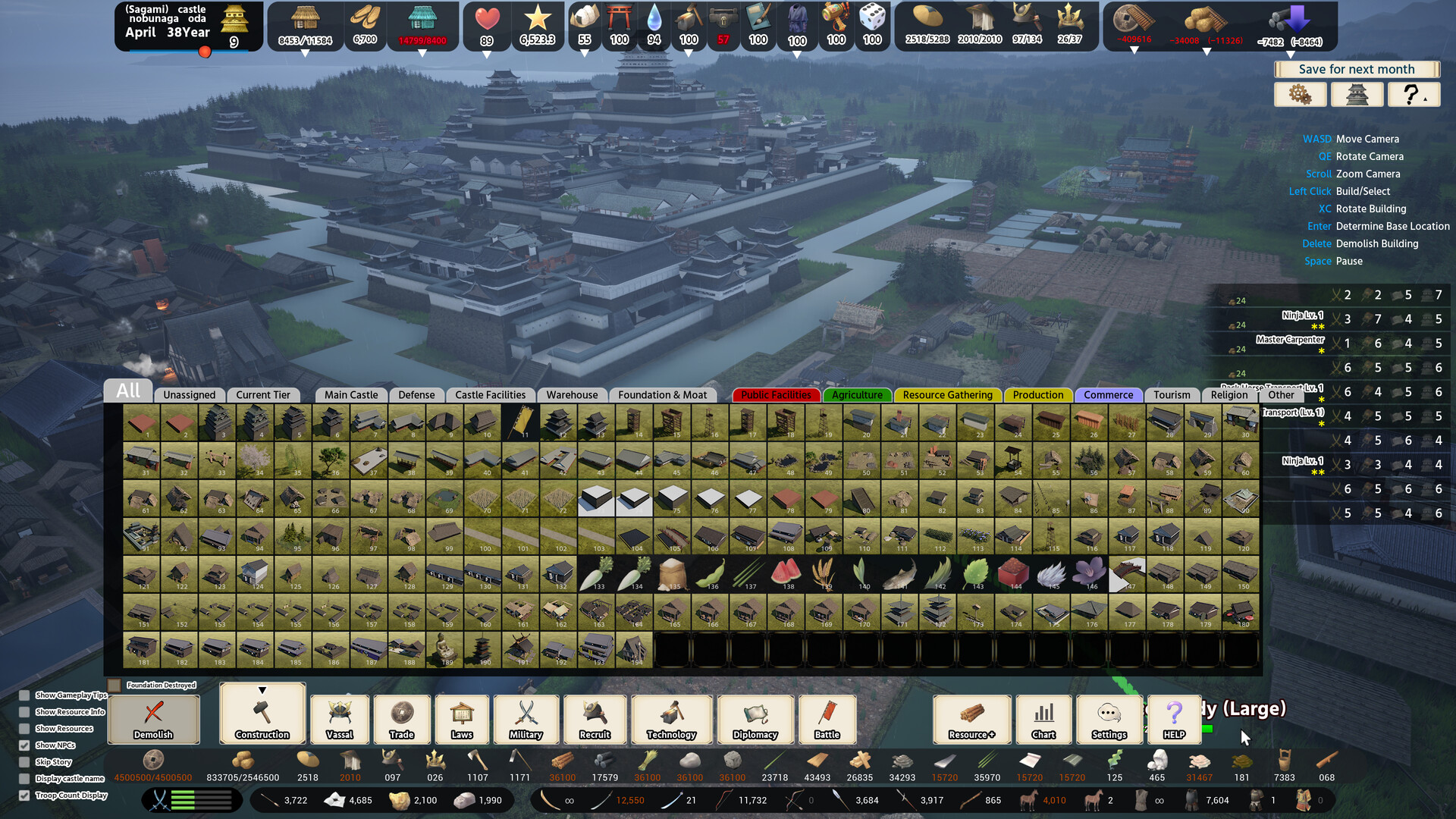
In building mode, each tier unlocks features such as construction, trade, edicts, recruitment, retainer management, military, a tech tree, diplomacy and battles. Officially there are more than 190 building types, six kinds of taxes, mobilization for forced labor, gear ranging from swords to muskets, and diplomacy once you control one of the 73 provinces. Difficulty can be fine-tuned via enemy aggressiveness, so you can focus on town building if you prefer. According to Steam, lowering the difficulty later on affects achievements.
Official launch trailer
sfvsoft released a launch trailer via Games Press to coincide with the store going live.
Release, price, languages and tech
The Steam page lists November 15, 2026 as the release date. The official press release pinned the launch to November 15, 2026 at 7:00 p.m. PST, which is November 16, 2026 at 4:00 a.m. Berlin time. Since then, Jyoka has been live and available to buy on Steam. The regular euro price is €30.49, currently 23 percent off at €23.47 (as of November 16, 2026, around 6:40 a.m. Berlin time). The press release announced $29.99 with substantial discounts in the first month after launch; the US store currently shows $23.09 instead of $29.99. Jyoka is still not listed at Instant Gaming. There is no official figure for playtime.
According to Steam, Jyoka is available for Windows PC only; macOS and Linux are not planned. The store page shows no Steam Deck verification. Supported text and interface languages are English, Japanese, Simplified Chinese, Russian, Spanish (Spain) and Portuguese (Portugal). German is not supported. The language table shows no checkmarks in the audio column, so there is no voice acting. The official minimum system requirements are fairly demanding and are listed in the table below this text; Steam does not provide a filled-in recommended spec. There is no official USK or PEGI rating.
Ratings at a glance
| Source | Score | As of |
|---|---|---|
| Metacritic | no Metascore yet (TBD, 0 critic reviews) | Nov 17, 2026 |
| OpenCritic | not listed yet | Nov 17, 2026 |
| Steam user reviews | Mixed (48% of 41 reviews positive) | Nov 17, 2026 |
| PlayInsider | 52% | Nov 17, 2026 |
System requirements (PC)
| Minimum | |
|---|---|
| Operating system | Windows 11 64-bit |
| Processor | Intel Core i7-10750H @ 2.60GHz |
| graphics card | NVIDIA GeForce RTX 3060 Laptop GPU |
| Memory | 16 GB RAM |
| storage | 6 GB |